Lessons from a Singaporean restaurant helped me run a global advertising team.
I’m a computer programmer whose career took 17 “left turns” before leading global advertising at Oracle for a dozen years.
One of those detours was an eight year run of evenings waiting tables at my wife’s Singaporean restaurant. Working ten hours in an office plus four hours as a server might sound exhausting. But instead it was energizing during a stagnant period of my corporate career.
More surprisingly, the lessons I absorbed helped me rise through the executive ranks in the years that followed.
The joy of creating something “real”. With zero restaurant experience between us, we took over a tiny restaurant on the dark side of our San Carlos, California main street. The closely-packed 16 seat dining room, kitchen, walk-in freezer, storage and bathroom all fit into 400 square feet. We invested four months of sweat-equity restructuring the space, upgrading lighting, decorating, and cleaning, cleaning, cleaning. After years of creating bits and bytes — software, spreadsheets, powerpoints — it was incredibly satisfying to build something in the real world. That taught me that helping bring something to life brought me more happiness than “just” a bigger paycheck or more staff.
Start small and test audience reaction. With rent at only $1,000 a month, we calculated we could cover our fixed costs by selling only 21 dishes a day. If we failed, we weren’t going to destroy our savings. Most projects can benefit from getting a rudimentary product into people’s hands, gauging their reaction and then adapting.
The importance of a soft launch. Given our location outside the town center, we expected it would be difficult to draw customers. So we added a sign reading “Opening on August 12th” to our exterior during the last month of the build. As the chef, my wife spent the final week training a cook to work with her and prepping dishes for friends. To our surprise, there were a line of people down the street before we unlocked our door on opening night. It was a complete and total train wreck (even with our friend Hongwei swinging by for dinner and being conscripted into waiting tables for three hours). Thankfully, customers recognized that we were overwhelmed and were supremely patient. But it would have been far better if we had ironed out the inevitable glitches before we went live officially.
Extreme growth can distract you from your core business. Only months after opening, San Francisco Magazine included our restaurant in their “Top Ten Cheap Eats” issue. Then solid reviews in the San Francisco Chronicle, San Jose Mercury News, and even Singapore’s own Straits Times added more buzz. On weekend nights, we would do five turns — each table hosting five different sets of guests during a four hour run.
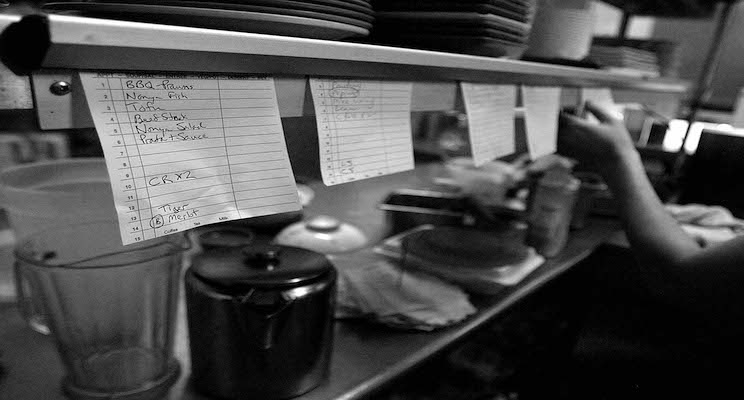
Through the first winter, guests wrote their name and party size on the waitlist and then huddled in their cars as we delivered hot tea to keep them warm. Eventually, the dive bar down the street gave us poker chips that people could exchange for one free drink while waiting — we would call the bartender when a table became available. It was an absolutely amazing (and profitable) period of time. But it was also completely unsustainable. My wife was doing 12 hour days of hard labor knowing that if she wasn’t there, the restaurant didn’t open.
Before one year was up, we were forced to secure a larger space at a time when the economy was hot and even marginal restaurants were raking in cash. We ended up relocating to Menlo Park. A lovely town dominated by traditional white tablecloth restaurants serving an older, well-to-do and heavily Caucasian community. Bottom line, this wasn’t our core audience.
We tried to straddle worlds by maintaining our street food menu while upgrading (in a limited fashion) the decor, comfort and service.
But for us, the unquantifiable magic was lost during the translation. If only we could have found a path that kept the street-food energy of the original concept while making the workload more manageable.
(Eventually, my wife transitioned the business to her brother, who has taken it to the 20-year mark via his own approach.)
The art of quickly reading an audience. I’m painfully shy by nature. I won’t call and ask what time a store closes. I won’t call a restaurant to make a reservation. My preference is to do everything online without human contact.
Waiting tables demanded that I put myself out there night after night. It also demanded that I “read” a table at a glance. Is this table an awkward first date where my task is to kick-start their evening? Is this table a romantic couple where I should be invisible? Is this table a long-married duo wanting entertainment with their food?
I’m still not great at this, but I learned that this skill is a true superpower — one common to successful client-facing advertising agency veterans. Finally, be thankful. During my days in the office, colleagues were telling me that, after two years of work experience, they expected their salary to surpass $100K (this was in the late 90’s). During my evenings, I was with people working two or three jobs, up to 14 hours a day, six days a week at minimum wage. An invaluable reality-check for those of us inside the tech bubble. Be grateful.